
First in situ record of Bobtail squid and egg masses in Northeast Greenland National Park
Dr Paige Maroni, from The University of Western Australia’s School of Biological Sciences, was lead author of the study published in Polar Biology, which recorded the Arctic bobtail squid, Rossia moelleri, in Northeast Greenland National Park.
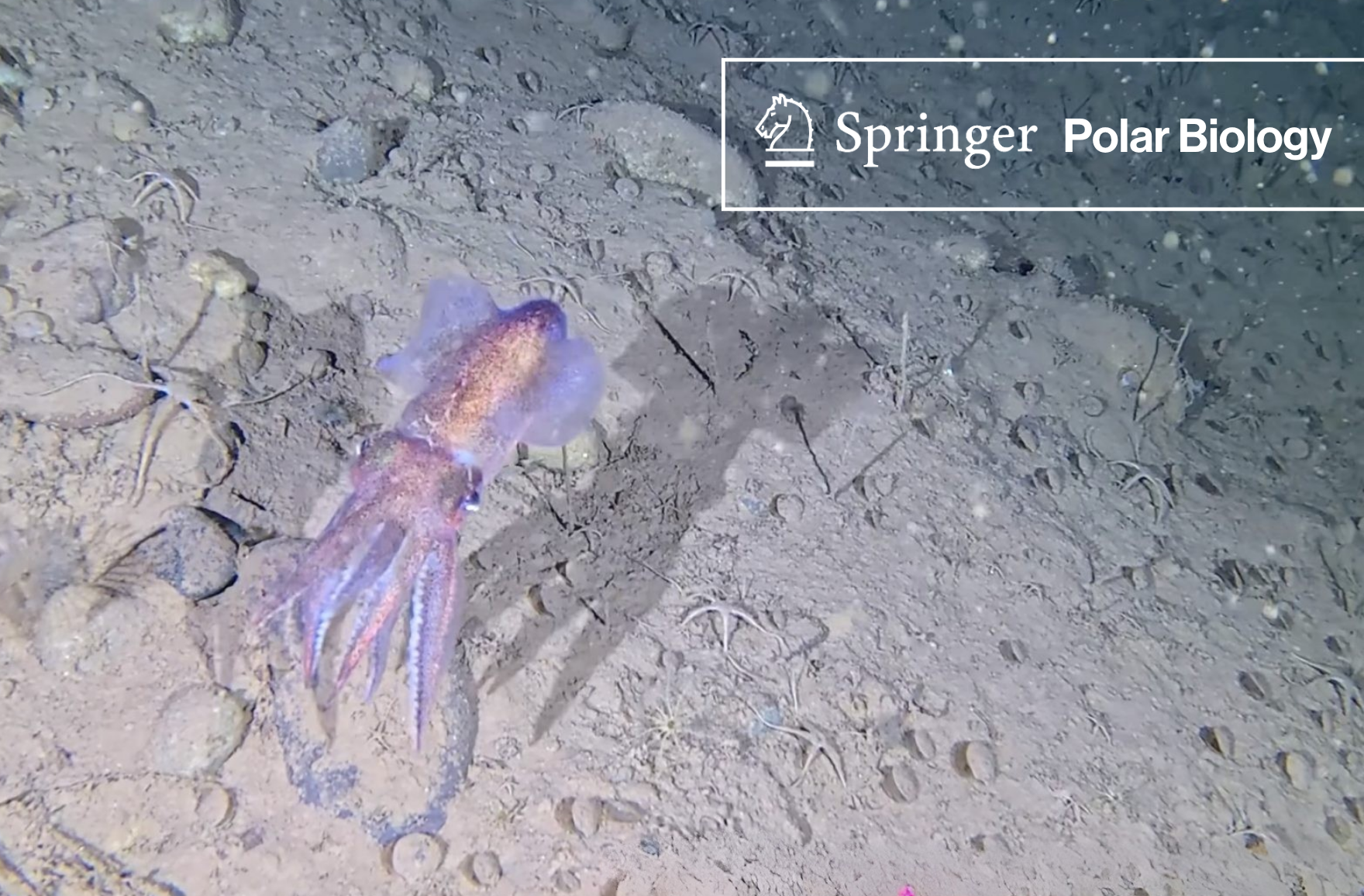
Frame grabs from 4 K ROV video showing the bobtail squid, Rossia moelleri, swimming near or resting on the seafloor. Red laser points indicate a 10 cm scale, with the individual estimated at approximately 10 cm in length. Image Credit: Paige Maroni
While rapid environmental change is reshaping Arctic marine ecosystems, much of the region remains biologically unexplored. The marine habitats of Northeast Greenland National Park, the largest national park on Earth, are among the least documented with limited benthic and pelagic data available. Establishing biodiversity baselines in this region is crucial for understanding ecosystem function and resilience under accelerating climate change. Cephalopods, which play vital ecological roles as both predators and prey, remain poorly known in Arctic waters, with few confirmed records. Here, we report the first in situ record of a mature female Rossia moelleri (Family Sepiolidae) and associated egg masses from NE Greenland NP. Using a Remotely Operated Vehicle (ROV), launched during a Secret Atlas Expedition Micro-Cruise in September 2025, we made in situ observations of the specimen and the egg clusters at 50 m depth in sub-zero water (− 1.6 °C). These findings confirm the presence of the Arctic endemic Rossia moelleri and provide direct evidence of active cephalopod reproduction in Northeast Greenland. The quality of these observations underscores the value of small-scale, low-impact ROV surveys for advancing biodiversity discovery in remote polar environments.
